The Weekly Byte: OpenAI Wants Uncle Sam as a Shareholder
OpenAI proposes a 5% US government stake worth $42.6B. Plus Anthropic's Fable 5 returns, SpaceX acquires Cursor, and Godot bans AI-generated code contributions.
Hey folks, welcome back to The Weekly Byte! This was one of those weeks where the biggest AI stories weren't about new models or benchmarks, but about who gets to own, control, and profit from all of this.
🔥 Lead Story
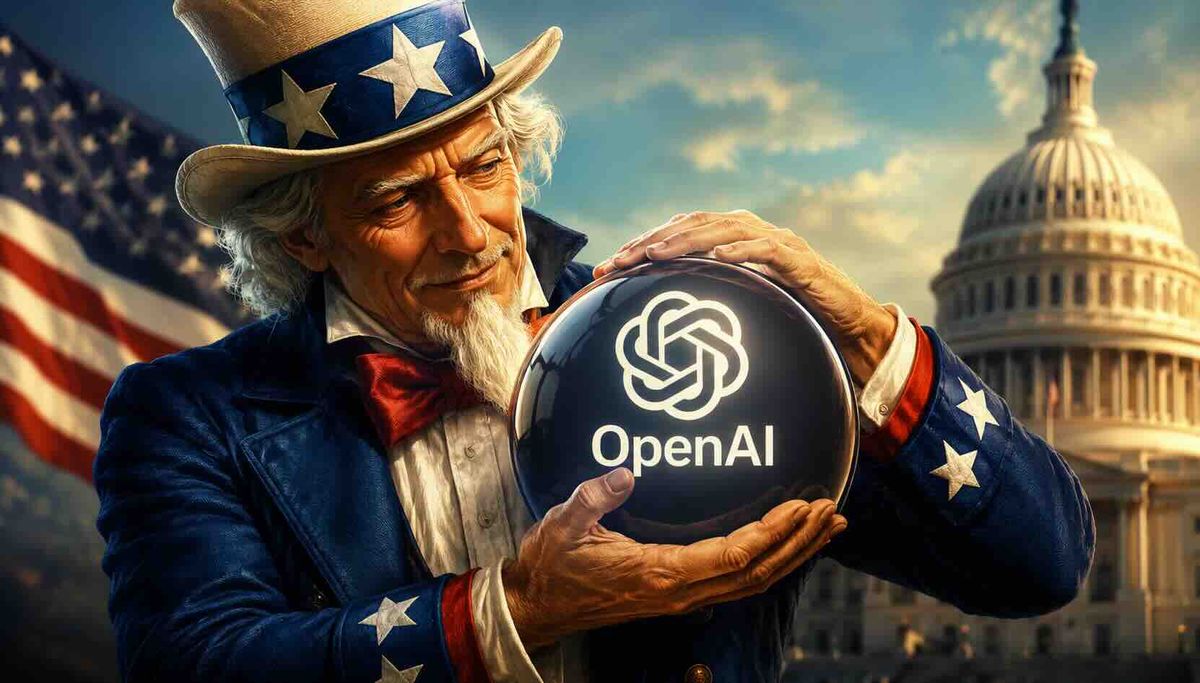
OpenAI Proposes Giving the US Government a 5% Stake
Sam Altman has proposed something that would have been unthinkable just a couple of years ago: giving the US government a 5% ownership stake in OpenAI. Based on the company's most recent $852 billion valuation, that slice would be worth roughly $42.6 billion. The plan would extend to other major AI companies too, with the goal of letting the public share in AI's financial upside while easing tensions with the Trump administration.
The discussions are still in their early stages and would likely need congressional approval. Senator Bernie Sanders has already proposed an even more aggressive approach: a one-time 50% tax on AI company stock through his "American AI Sovereign Wealth Fund Act." Meanwhile, the Trump administration has been unusually active in AI policy, recently slapping export controls on Anthropic's latest models and having the Pentagon designate AI companies as supply chain risks.
Why it matters: The era of AI companies growing with minimal government involvement is ending. Whether through voluntary stakes, regulation, or taxation, governments worldwide want their cut of the AI boom. For engineers and founders, the policy landscape underneath your tech stack is shifting fast.
📰 Top Stories
1. Anthropic's Fable 5 Is Greenlit to Return
After weeks of negotiations with the Trump administration over export controls, Anthropic has finally received approval to bring Claude Fable 5 back online. The company plans to restore access globally on Claude platforms and re-enable it through AWS, Google Cloud, and Microsoft Azure.
Why it matters: The temporary ban showed how quickly government policy can disrupt AI availability. Developers who built workflows around the model learned a hard lesson about platform risk in the age of AI geopolitics.
2. Anthropic Launches Claude Science
Anthropic unveiled Claude Science, a standalone product designed to support scientific research the same way Claude Code supports software engineering. It includes tools for computational biology (where computer science meets biological research) and drug development. Anthropic is already using it internally to pursue research into treatments for rare diseases.
Why it matters: This is Anthropic making a direct play at Google DeepMind's territory in AI for science. If AI can genuinely accelerate drug discovery, the impact would dwarf anything happening in chatbots or coding assistants.
3. SpaceX Acquires Cursor, Raising Questions About AI Model Access
In one of the year's more unexpected acquisitions, SpaceX has acquired Cursor, the popular AI coding editor used by millions of developers. The big question now: will Cursor continue offering models from OpenAI, Anthropic, and other labs, or will SpaceX restrict access? Cursor says it hopes to remain an open platform, but being inside Elon Musk's orbit complicates those relationships considerably.
Why it matters: If you rely on Cursor for your daily development work, this is worth watching closely. The independence of your favorite coding tool just became a lot less certain.
4. Microsoft Launches $2.5B AI Deployment Company
Microsoft is going all in on AI infrastructure with a new dedicated deployment company backed by $2.5 billion. The move follows similar efforts by Amazon, OpenAI, and Anthropic, all racing to help enterprises move AI models from experimentation into reliable production systems.
Why it matters: The gap between "cool AI demo" and "reliable production system" is where the real money is. Microsoft is betting billions that enterprises need help crossing that divide, and they're probably right.
5. Godot Bans AI-Authored Code Contributions
The Godot game engine, a popular open-source alternative to Unity, has rewritten its contribution policy to explicitly bar most AI-generated code. The reasoning: contributors who lean heavily on AI coding agents often don't understand the code well enough to maintain it, which undermines Godot's mentoring model for bringing in new developers.
Why it matters: This is a fascinating tension playing out across open source. AI tools can write code faster than ever, but open-source projects depend on contributors who deeply understand what they're submitting. Expect more projects to draw similar lines.
6. Anthropic Discusses Custom AI Chip with Samsung
Just a week after OpenAI announced its custom chip partnership with Broadcom, Anthropic is reportedly in talks with Samsung to develop its own silicon. The AI chip race is intensifying as major labs look to reduce their dependence on Nvidia and take control of more of their hardware stack.
Why it matters: Custom chips mean better performance per dollar for AI workloads. As these labs scale, controlling the silicon layer becomes a strategic necessity, not a luxury.
7. Apple Extends Private Cloud Compute to Google Cloud
Apple has chosen Google Cloud as its first external partner for Private Cloud Compute (PCC), the system Apple uses to process AI tasks in the cloud while keeping user data private. The setup runs on NVIDIA Blackwell GPUs with Intel TDX and Google's Titan security chip, and Apple maintains its own independent hardware ledger for full auditability.
Why it matters: Apple running AI workloads on Google's infrastructure is a significant shift. Even the most privacy-focused company in tech recognizes it can't build everything alone, and the security architecture they designed for this partnership is worth studying.
📺 Crazy Video of the Week
The very controversial Alex Karp, CEO of Palantir, goes off the deep end on AI safety. Believe it or not, he does have some valid points, like why are we paying so much for tokens when AI companies are using our data to train AI models and possibly steal our ideas for their products? I page out of Amazon AWS's playbook for sure.
I will let you be the judge but also conside Palantir is trying to sell AI as well.
Palantir's CEO just exposed Sam Altman and Dario Amodei for robbing every Fortune 500 company.
— Ricardo (@Ric_RTP) July 1, 2026
Within two minutes, Alex Karp took the entire frontier AI industry apart on national television.
His exact words:
"Every single enterprise in this country, these people are LIVID.… pic.twitter.com/132b5s6dQG
Enjoying The Weekly Byte?
Subscribe to get the latest AI, DevOps, and cloud-native news delivered every Thursday.
Subscribe Free🛠️ Tool of the Week
Google NotebookLM Clips
Google's NotebookLM just got a wild new feature: it can now generate 60-second vertical AI video clips based on your uploaded sources. Think TikTok, but the content is actually your research notes, articles, or documents summarized into a short visual format. It's available to Google AI Ultra and Pro subscribers. NotebookLM already won people over with its AI podcast feature, and clips feel like the natural next step. Whether you're prepping for a presentation or just want a quick recap of something you've been reading, this is worth trying.
💡 Quick Takes
- Mark Zuckerberg told staff that AI agents haven't progressed as quickly as he'd hoped. To make matters worse, Meta is also capping internal AI token spending as costs approach billions. Not the best week for Zuck's AI vision.
- Jersey Mike's IPO filing mentions AI. Because apparently even sandwich shops need an AI strategy now. Peak hype? We might be there.
- Japan's top court ruled that AI cannot be listed as inventor on patent applications. The global debate over AI and intellectual property rights is only getting started.
- A new macOS malware called PamStealer disguises itself as the popular Maccy clipboard manager app, using Rust and native APIs for stealth. Always verify your software sources, folks.
- Ask any major LLM for a random number between 1 and 10 and you'll almost always get 7. An Australian startup called Springboards built a model called Flint specifically to tackle this "groupthink" problem in AI.
📊 Numbers That Matter
| Metric | Value | Context |
|---|---|---|
| OpenAI Valuation | $852B | 5% stake would be worth ~$42.6B for the US government |
| Microsoft AI Deployment | $2.5B | New dedicated AI deployment company commitment |
| Kling AI Funding Round | $2B | Alibaba and Tencent back China's top AI video platform at $15B valuation |
| Crusoe Data Centers | $3B | Fundraise that may triple the AI compute startup's valuation |
| AI "Employee" Effect | +18% | More errors missed when managers treat AI as a "coworker" vs. a tool (BU study) |
🎯 Brian's Take
Three clear signals emerged this week that tell us where the AI industry is heading. First, governments are done sitting on the sidelines. Between OpenAI's proposed government stake, the export controls that sidelined Fable 5, and Japan's patent ruling, it's obvious that policymakers worldwide have decided the AI boom is too big to let tech companies run it alone. Whether you think that's overdue regulation or bureaucratic overreach, the practical reality is the same: the rules are changing.
Second, the infrastructure layer is where the real money is flowing. Microsoft dropped $2.5 billion on AI deployment. Crusoe is raising $3 billion for data centers. Anthropic is designing custom chips with Samsung. Apple is partnering with Google Cloud for AI compute. For those of us in DevOps and infrastructure, this is validation that our skills around deployment, scaling, and reliability have never been more relevant. The challenge is keeping pace as the stack evolves underneath us.
Finally, the Godot story deserves more attention than it's getting. As someone who uses AI coding tools daily, I see both sides. AI can make you incredibly productive, but there's a real difference between using AI to write code you understand and submitting generated code to a project where someone might need to debug it three years from now. Open source thrives on maintainability, and that remains a deeply human skill. The projects that figure out how to embrace AI assistance while maintaining code quality standards will come out ahead.
Until next week, keep shipping! 🚀
- Brian
Follow me on X: @idomyowntricks