OpenAI Enters the Chip Race, and Alibaba Allegedly Cheated!
OpenAI reveals its first custom AI chip, IBM extends Moore's Law, Anthropic accuses Alibaba of stealing Claude, and $27M spent on one congressional race.
Interesting week of news. OpenAI finally joined the custom-silicon club, IBM bought Moore's Law another decade, and Anthropic took a serious public swing at Alibaba. On top of that, $ 27 million in AI money went into a single congressional primary, and Ford had to pull its retired engineers back in to clean up after its own robots. Let's get into it.
🔥 Lead Story
OpenAI Reveals Its First Custom AI Chip: Jalapeño
OpenAI has unveiled Jalapeño, its first custom-built AI processor, developed in partnership with Broadcom. The chip is an ASIC - an Application-Specific Integrated Circuit, meaning it was designed from scratch for one job: running AI inference. That's the process of taking a user's prompt and generating a response through ChatGPT or Codex, as opposed to training (where models consume massive datasets). Broadcom's CEO says early performance matches Nvidia's Blackwell chips and Google's TPUs, with better energy efficiency per unit of compute.
OpenAI expects to deploy Jalapeño by the end of 2026. The company calls it "the first step in a multi-generation compute platform," meaning this is a long game. They have been talking about building custom silicon since late 2025, nine months before this announcement. The chip will sit alongside Nvidia GPUs rather than immediately replacing them, but the direction is clear: every major AI company wants to reduce its dependence on Nvidia and control more of its own compute stack, which is a page out of Google Gemini's playbook.
Microsoft, Meta, Amazon, and Google all have custom AI chips now. OpenAI was the last major holdout. Now they're in the game. Antrhopic remains a renter of chips and instead focuses on the top of the stack.
Why it matters: Nvidia's dominance in AI compute has been one of the defining facts of the last three years. Every chip announcement from a major AI lab is a vote against that concentration of supply. Jalapeño won't unseat Nvidia overnight, but it signals that OpenAI is serious about long-term infrastructure independence and puts more pressure on Nvidia to keep innovating on price and performance.
📰 Top Stories
1. IBM Just Gave Moore's Law Another Decade
IBM has built a prototype chip with 100 billion transistors packed into an area the size of a fingernail, twice the density of its previous best. The trick is a new architecture called a nanostack that stacks transistors vertically rather than trying to shrink them further horizontally. Compared to IBM's current chips, the new design is up to 50% faster and 70% more energy efficient.
Why it matters: Transistors have been hitting physical limits for years, and quantum effects start interfering when they get too small. Vertical stacking is the architectural pivot the industry has been betting on. IBM putting 100 billion transistors on a fingernail-sized chip is proof that the bet is paying off.
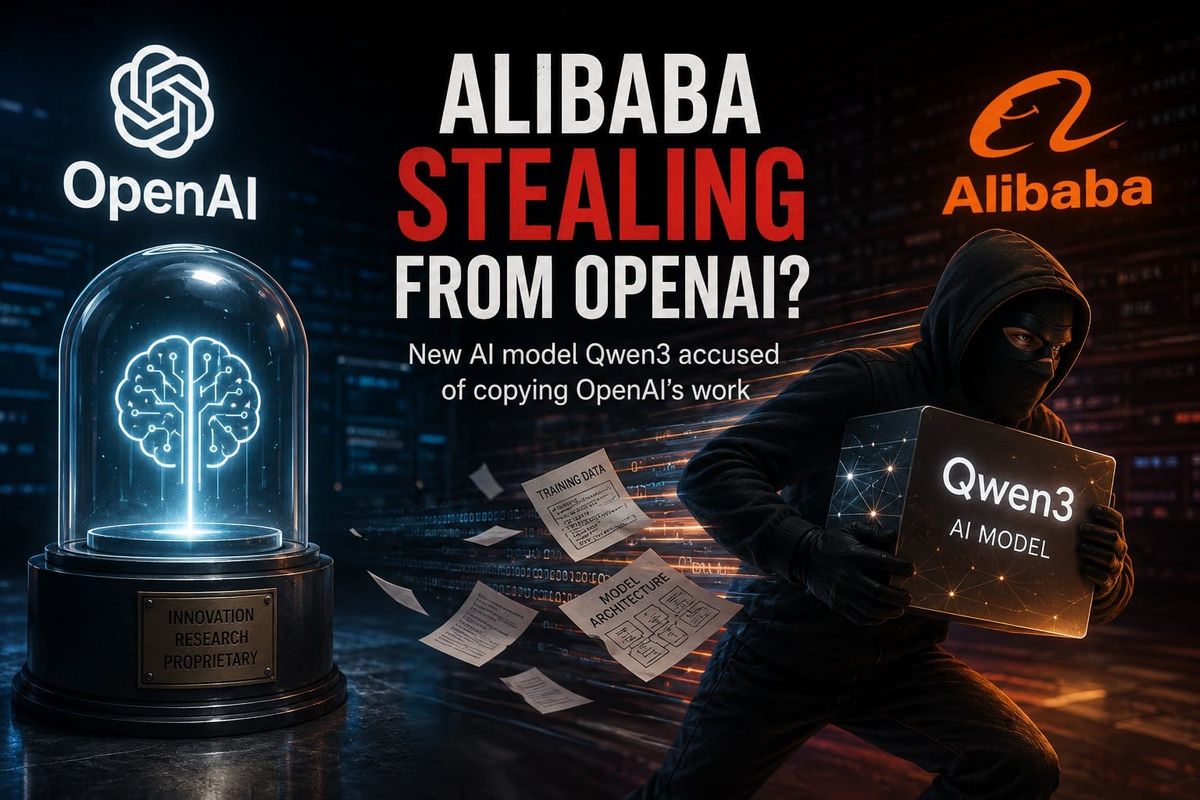
2. Anthropic Says Alibaba Illicitly Extracted Claude's Capabilities
Anthropic has accused Alibaba of using its API access to systematically extract Claude's capabilities - in other words, using Claude's outputs to train a competing model without authorization. The accusation is significant: it would mean Alibaba used a paid API relationship to effectively copy Anthropic's intellectual property at scale. This is one of the most serious accusations of AI model extraction (sometimes called "model distillation attacks") leveled by a frontier lab against a named company.
Why it matters: If true, this is the AI equivalent of industrial espionage via a SaaS subscription. It puts every API provider on notice that they need better detection for systematic extraction patterns. Expect terms of service across the industry to get much more explicit about this in the coming months.
3. The $27 Million AI Proxy War Ends in a Draw
In the New York 12th congressional district primary, AI companies spent $27 million backing opposite sides. OpenAI, Palantir, and Andreessen Horowitz executives backed a super PAC targeting Alex Bores, a state assemblyman who had authored AI safety legislation. Anthropic-connected PACs spent millions defending him. Bores lost narrowly - 35% to 39.1% - to Micah Lasher. Neither side really won.
Why it matters: We are in an era where AI companies are directly funding political campaigns to shape the regulatory environment they operate in. $27 million on a local primary is a signal that this will only intensify as federal AI legislation gets closer to reality. Concerning? Yes!
4. Ford Had to Hire Back Retired Engineers to Fix AI's Mistakes
Ford just ranked No. 1 in JD Power's initial quality survey for the first time in 16 years. But the path there involved a painful lesson: Ford had leaned heavily on automated systems and AI tools in production and design, and the results were bad. The company had to bring back experienced engineers, sometimes from retirement, to fix problems the AI-assisted processes created. VP of vehicle hardware engineering Charles Poon said:
"Mistakenly, we thought that by just introducing artificial intelligence and adjusting the design requirements that we had, that that would produce a high-quality product."
Why it matters: This is one of the most honest public post-mortems from a major company about what happens when you move too fast on automation without preserving institutional knowledge. The lesson applies well beyond auto manufacturing.
5. Anthropic's Claude Tag Is Embedding Itself in Your Slack
Anthropic launched Claude Tag, which puts Claude directly into Slack as a persistent team member. You can @-mention it in any channel, and it builds up context about your company over time, learning your workflows, terminology, and processes from conversations. It positions Claude not as a chatbot you query but as a team member that's always present.
So if you weren't being tagged enough in Slack, Antropic has now entered the chat!
Why it matters: This is a smart enterprise distribution play. The team that has Claude in their Slack is less likely to switch to a competitor(think process moat), their institutional context is locked in. It's the same reason email clients are sticky: the data gravity is real.
6. Token Rationing Has Arrived
Companies are discovering that when you give employees unlimited AI access, they use it for everything, including very small tasks that consume disproportionate amounts of tokens. Organizations are now implementing per-user token limits, tiered access policies, and usage dashboards to manage AI spend. TechCrunch calls it the end of the "tokenmaxxing" era.
Why it matters: The free-for-all phase of enterprise AI adoption is ending. Budget reality is catching up with the hype. If you're building internal AI tooling, cost governance is now a feature, not an afterthought.
I predict we will see budget- and cost-saving startups filling this space, as we've seen in the Cloud space years ago.
7. AI Was Supposed to Kill Engineering Jobs. It Hasn't.
SignalFire data shows that engineers are now making up a larger share of new hires than before the AI boom, not a smaller one. While overall layoffs have been significant across tech, engineering roles have proven more resilient than any other function. The theory: AI tools are making engineers more productive, which increases demand for engineers rather than replacing them.
Why it matters: A useful data point against the narrative that AI will eliminate software engineering. The more likely pattern is that the number of engineers stays flat or grows while individual output increases significantly(as I previously predicted back in 2024, as well in my article AI is an Enabler, not a Job Killer), which compresses the number of engineers needed per unit of product, but doesn't eliminate the role.
Enjoying The Weekly Byte?
Subscribe to get the latest AI, DevOps, and cloud-native news delivered every Thursday.
Subscribe Free🛠️ Tool of the Week
RubyLLM - A Ruby Framework for All Major AI Providers
If you're working in a Ruby codebase and want to integrate with Claude, GPT-5, or other major LLMs without managing each provider's API separately, RubyLLM is worth a look. It provides a unified interface across providers, handles authentication, and gives you a consistent way to call models regardless of which company trained them. It landed on Hacker News this week with 403 points, a strong signal from the Ruby community. If you're shipping Rails apps and want to add AI features without rewriting everything in Python, this fills that gap.
💡 Quick Takes
- Europe's heat wave is knocking nuclear plants offline - France hit 44°C/111 °F on June 23, its hottest day since 1947(mind you, we don't have air conditioning here in Switzerland and are melting). A nuclear reactor at Golfech shut down because the river used to cool it got too warm. Several other reactors have been ramped down. The grid stress is real.
- AI wrote part of a defense bill summary, apparently - A screenshot showed Claude's name embedded in an amendment summary for the 2027 National Defense Authorization Act. The congresswoman's office walked it back, saying it was used for spellcheck. Whether you believe that is up to you.
- Agility Robotics going public at $2.5B via SPAC - The humanoid robotics startup behind the Digit robot plans to raise $620M. The humanoid robot IPO window is apparently open now.
- Oracle laid off 21,000 people to fund AI data centers - The company is spending billions on infrastructure while running up significant debt. The bet is that AI demand will outrun the cost of capital.
- Big AI labs are hiring philosophers - The Economist reports on why. Short answer: alignment, ethics, and the limits of pure engineering solutions to questions about what AI should and shouldn't do.
📊 Numbers That Matter
| Metric | Value | Context |
|---|---|---|
| IBM nanostack transistor density | 100B / fingernail | Twice IBM's previous best, achieved by stacking transistors vertically |
| AI proxy war spending | $27M | Spent on a single New York congressional primary by AI company-backed super PACs |
| Amazon India AI investment | $13B | Fresh infrastructure commitment as tech companies race to build AI capacity in India |
| Memory chip profit (1 quarter) | $28.2B | A US memory chip maker saw revenue quadruple and profit jump from $1.88B to $28.2B YoY |
| France's hottest day on record | 44°C (111°F) | June 23, 2026 - hottest since records began in 1947, enough to shut down a nuclear reactor |
🎯 Brian's Take
Two chip announcements in one week, OpenAI's Jalapeño and IBM's nanostack - and both are telling the same story from different angles. Jalapeño says: " We don't want to depend on one supplier for the compute that runs our entire business. IBM's nanostack says: the hardware layer hasn't run out of headroom, we just needed to think in three dimensions instead of two. Together they're saying that the compute arms race has a long road ahead of it, and the companies that control their own silicon are going to have a structural cost and performance advantage over those that don't.
The Ford story is the one I keep thinking about, though. "Mistakenly, we thought that by just introducing artificial intelligence and adjusting the design requirements that we had, we would produce a high-quality product." That sentence is going to age like fine wine. Every team that has aggressively automated without preserving the institutional knowledge of the people who understood the system deeply is going to hit some version of this if they haven't already. The engineers Ford had to bring back from retirement, they had context the models don't have and can't easily learn from training data. That gap between what AI can do and what experienced people know is real, and it matters most in the places where mistakes are expensive.
And the $27M proxy war over a New York congressional primary is just the opening bid. AI regulation is coming, and the companies that get to shape it will have an enormous structural advantage. When Anthropic and OpenAI are funding opposing super PACs in local elections, you know the lobbying phase of the industry has fully arrived. If you thought the social media policy battles were messy, buckle up; at least Facebook wasn't accusing Alibaba of stealing its model capabilities while simultaneously spending millions on political primaries in the same week.
Until next week, keep shipping! 🚀
- Brian
Follow me on X: @idomyowntricks