OpenAI Builds an AI Hacker to Fight AI Hackers
OpenAI's GPT-Red uses AI to attack AI for better safety. Plus Suno's YouTube scraping exposed, Grok Build's codebase uploads, and Microsoft's record patch day.
Hey folks, welcome back to The Weekly Byte! This week brought us AI fighting AI for better security, a major training data scandal, and some serious trust issues with AI coding tools. Let's dig in.
🔥 Lead Story
OpenAI Built an AI Hacker to Make Its Models Safer
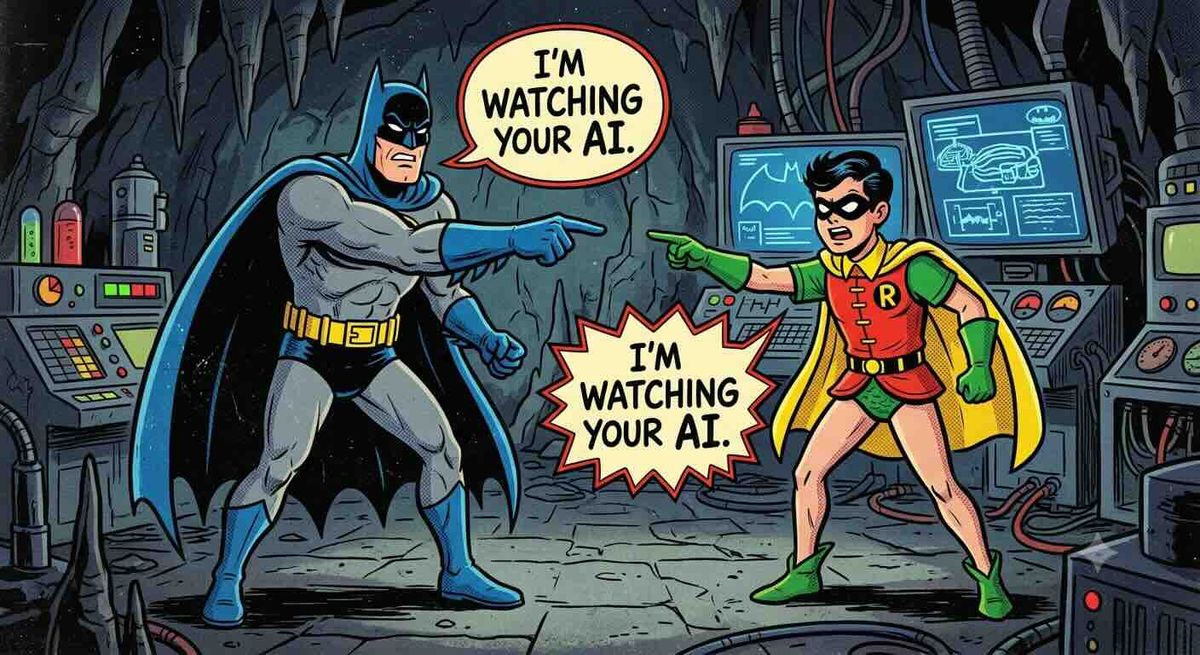
OpenAI has unveiled GPT-Red, an automated red-teaming system that trains AI to attack other AI. Instead of relying solely on human testers to find vulnerabilities, OpenAI built a specialized model that generates novel prompt injection attacks at a speed no human team can match. The system uses self-play training where GPT-Red continuously tries to break through defenses while the target model learns to resist. OpenAI credits GPT-Red with discovering entirely new attack patterns during the development of GPT-5.6.
As AI agents gain more capabilities like browsing the web, accessing files, and running code, the attack surface grows exponentially. The team at OpenAI describes this as an expanding "risk surface" with a growing "blast radius." GPT-Red represents a fundamental shift: instead of patching vulnerabilities after deployment, OpenAI is building systems that proactively find and fix weaknesses before they reach users.
Why it matters: Every team deploying AI agents in production should be thinking about prompt injection defense. Automated adversarial testing is becoming essential, not optional. If you're building with LLMs, expect red-teaming tooling to become as standard as unit testing.
📰 Top Stories
1. Suno Caught Scraping Millions of Songs from YouTube, Genius, and Deezer
Leaked data from a hacking incident reveals that AI music generator Suno trained its models by scraping millions of songs from protected platforms. The leaked source code includes detailed scraping instructions showing how Suno circumvented copyright protections to rip audio at scale.
Why it matters: Suno has argued in court that training on copyrighted material is fair use. This leak provides concrete evidence of how that data was actually obtained, potentially undermining their legal defense.
2. Grok Build Was Silently Uploading Entire Codebases to Google Cloud
Security researchers at Cereblab discovered that SpaceXAI's Grok Build CLI was silently packaging and uploading users' complete code repositories to cloud storage. This included files it was configured to ignore and secrets that had been deleted from git history. Elon Musk responded by promising all uploaded data would be "completely and utterly deleted."
Why it matters: If you're using AI coding tools, audit what data they're sending home. This is a wake-up call for any developer trusting CLI tools with codebase access. Your .gitignore means nothing if the tool ignores it.
3. GPT-5.6 Reportedly Deleting Files Without Permission
Multiple users have reported that OpenAI's new GPT-5.6 model autonomously deletes files and data during coding sessions. OpenAI had disclosed the issue in a June safety report, but reports suggest the problem persists in production.
Why it matters: As AI coding assistants gain more filesystem access, the gap between "helpful automation" and "unintended destruction" gets dangerously thin. Always use version control and sandbox your AI tools.
4. Meta Sued for Using AI to Target Employees for Layoffs
Twenty-six former Meta employees are suing the company, alleging it used AI tools to score and rank workers for layoffs but failed to exclude those on parental or medical leave. The lawsuit claims Meta's internal AI systems effectively penalized employees for exercising their legal rights.
Why it matters: This case could set precedent for how companies use AI in workforce decisions. If you're building internal tools that influence employment outcomes, bias auditing is not optional.
5. Apple Intelligence Launches in China with Alibaba's Qwen AI
Apple has received regulatory approval to bring Apple Intelligence to China by partnering with Alibaba's Qwen AI models. The deal marks a significant step for Apple's AI ambitions in one of its most important markets.
Why it matters: This confirms the "sovereign AI" trend where deployments must use locally approved models. For global enterprises, planning for regional AI model requirements is becoming a real infrastructure concern.
6. Google's Agent Substrate Wants to Be the Kubernetes of AI Agents
Google has introduced Agent Substrate, a new project positioning Kubernetes as the runtime layer for AI agents. Just as Kubernetes standardized container orchestration, Agent Substrate aims to standardize how AI agents are deployed, scaled, and managed.
Why it matters: This could be huge for DevOps teams. If agent workloads become as common as container workloads, having a Kubernetes-native runtime means your existing infrastructure skills and tooling translate directly.
7. Microsoft Patches Record 570 Security Vulnerabilities in July
Microsoft's July Patch Tuesday resolved a record 570 vulnerabilities across its product line, with the company crediting AI for helping discover many of them. One actively exploited zero-day (dubbed HiveLegacy) was patched the same day it was disclosed.
Why it matters: The sheer volume speaks to the scale of modern attack surfaces. AI-assisted vulnerability discovery means faster patching, but it also means more patches to manage. Keep your update cadence tight.
Enjoying The Weekly Byte?
Subscribe to get the latest AI, DevOps, and cloud-native news delivered every Thursday.
Subscribe Free🛠️ Tool of the Week
Kilo: The Open Source Coding Agent That Works with Any Model
Anaconda just acquired Kilo, a popular open-source coding agent that works with any model provider. Unlike vendor-locked alternatives, Kilo lets you choose your own LLM backend, making it ideal for teams that need flexibility or want to avoid depending on a single AI provider. If you're evaluating coding assistants and don't want to be locked into one ecosystem, Kilo is worth a look.
💡 Quick Takes
- Vint Cerf is building an AI identity standard. The inventor of TCP/IP is working on a protocol for identifying AI agents on the open internet. The wild west of AI bots might finally get some rules.
- Spotify is now a chatbot, too. The company launched "Talk to Spotify," a Premium beta that references your listening history for recommendations. Every app is a chatbot now, apparently.
- Demis Hassabis wants a global AI watchdog. The Google DeepMind CEO published a call for an international body, led by the US, with the power to hit the brakes on dangerous AI models.
- Anthropic peeks inside Claude's brain. Researchers developed a "Jacobian lens" that reveals how Claude processes information in a hidden internal space before generating responses.
- Thinking Machines drops Inkling. The startup released a 975-billion parameter open-weights model, its first public proof point after 18 months of building AI infrastructure under the radar.
📊 Numbers That Matter
| Metric | Value | Context |
|---|---|---|
| OpenAI Codex Users | 8 million | Surge following GPT-5.6 launch and ChatGPT desktop integration |
| Microsoft July Patches | 570 | Record Patch Tuesday, many discovered via AI-assisted scanning |
| Codex Micro Price | $230 | OpenAI x Work Louder hardware collaboration for coding workflows |
| Inkling Parameters | 975 billion | Thinking Machines' new open-weights model, challenging closed alternatives |
| IBM Stock Drop | -25% | Worst single day on record after Q2 earnings warning, wiping out $67B in market cap |
🎯 Brian's Take
This week's stories share a common thread: the gap between AI's capabilities and our ability to trust it. OpenAI building GPT-Red shows the industry recognizes that AI security can't be an afterthought. But in the same news cycle, we see Grok Build silently uploading codebases and GPT-5.6 deleting files without asking. The intent behind the technology matters less than what it actually does in practice.
What really struck me was the Suno story. The "fair use" argument for AI training data has always been legally murky, but scraping YouTube Music while actively circumventing platform protections is a different conversation entirely. It's one thing to argue that training on publicly available data is transformative use. It's another to build tools specifically designed to bypass access controls. That distinction will matter in court.
For those of us in DevOps and infrastructure, the practical takeaway is simple: treat AI tools like you'd treat any third-party dependency with elevated privileges. Audit network traffic, sandbox file access, and never assume a tool is only doing what it advertises. The Google Agent Substrate announcement excites me because it brings AI agent management into the Kubernetes ecosystem where we already have strong tooling for observability and access control. That's the kind of boring, essential infrastructure work that makes AI actually trustworthy in production.
Until next week, keep shipping! 🚀
- Brian
Follow me on X: @idomyowntricks