The Ultimate Productivity System: From Mindset to Metrics
Stop calculating ROI only on software licenses. Learn the hidden cost of "free" legacy tools (like spreadsheets and outdated systems) and discover how they secretly destroy team velocity and cripple enterprise efficiency.
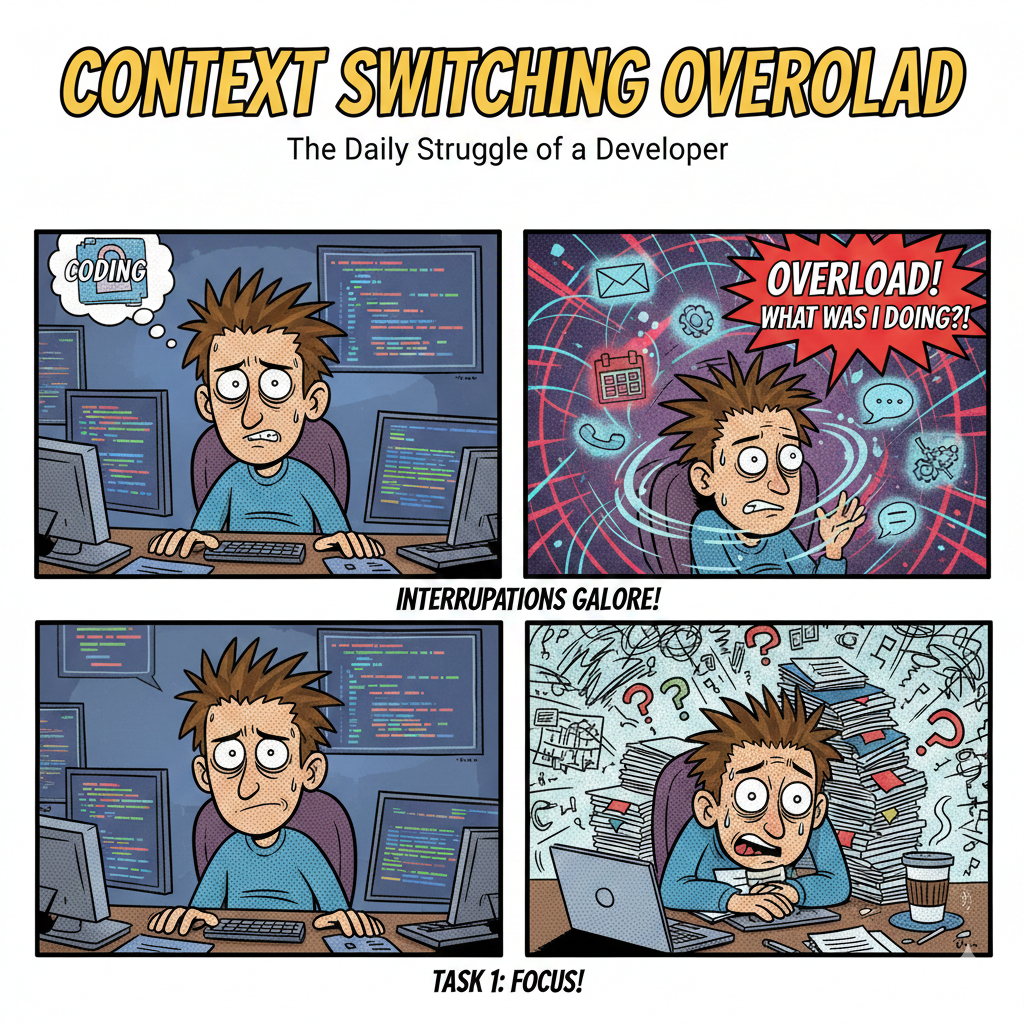
"Be more productive." It's the empty promise of the digital age. We spend endless hours optimizing 20-minute tasks, yet we feel more burned out than ever.
The problem isn't your to-do list, it's your system. Most people focus on the wrong things: tracking minor inputs (time, tasks) instead of maximizing high-leverage outputs (results, impact).
True, sustainable productivity isn't about being busy; it's about engineering a system that drives disproportionate results with minimal friction. This guide will walk you through the three pillars of a modern, high-output productivity system, moving your focus from managing time to mastering impact.
Pillar 1: The Foundation Mindset (Why You Work)
Before you download a single app, you must address the core cultural and psychological blocks that destroy efficiency. Productivity is a cultural choice before it is a scheduling challenge.
1. Define Purpose and Flow (The Ikigai Advantage)
If your work doesn't align with your deep purpose, you will constantly fight resistance. Trying to force yourself through meaningless tasks is the single most significant drain on energy.
- The Fix: Leverage the concept of Ikigai (your reason for being). When your work aligns with your passion, profession, vocation, and mission, you eliminate the mental friction required to start and sustain effort.
- Action: Dedicate 80% of your focused time to tasks that push you into a state of Flow, where the challenge meets your skill level, and distractions vanish.
2. Time is an Output, Not an Input
Stop measuring your day in hours spent at your desk. This metric rewards inefficiency and "busywork." The modern high-output leader measures time as a finite resource used to achieve a specific, high-value result.
Stay Updated
Get actionable AI & tech insights delivered every Friday. No fluff, just value.
Subscribe to The Weekly Byte →- The Fix: Practice Time Blocking with Intent. Don't just block 9-11 AM for "project work;" block it for "Drafting the Q3 Strategy Memo." If the memo is done at 10:30 AM, your input is complete, and your efficiency is rewarded.
- The Result: You decouple self-worth from hours logged, freeing you to prioritize deep, concentrated effort.
Pillar 2: The Metrics Framework (How You Measure)
If you're still tracking completed tasks, you're tracking the wrong thing. You need metrics that reflect velocity and impact, aligning directly with your strategic goals.
1. Learning Velocity: The True Metric of Success
In a world defined by change, the fastest organizations are those that learn and adapt the fastest. Success isn't measured by the number of perfect projects launched; the rate of intentional iteration measures it.
- The Fix: Measure Learning Velocity. How quickly does your team or department move from idea conception to real-world feedback and iteration? This rewards smart risk-taking and fast recovery over cautious planning.
- Strategic Link: This is the core principle institutionalized by the Chief Failure Officer mindset: reward the team that takes the most informed shots on goal.
2. High-Leverage Task (HLT) Completion Rate
Every task falls on a spectrum from low-leverage (email, scheduling) to high-leverage (strategy, product vision, closing a deal).
- The Fix: Assign a Leverage Multiplier (1x to 10x) to tasks based on their strategic impact. Your true productivity metric is the percentage of your focused time spent on HLTs (tasks with a 5x multiplier or higher).
- Action: If your HLT Completion Rate is below 60%, you are wasting time on work that could be automated, delegated, or eliminated.
Pillar 3: Execution and Tools (What You Use)
Your tools should disappear into your workflow. Any tool that requires constant maintenance or forces you to adapt your process to its constraints is an efficiency liability, aligning with my mantra Less is More.
1. The Principle of Digital Minimalism
The average knowledge worker switches between tasks or applications every 40 seconds. This context switching is the single greatest barrier to deep work.
- Action: Implement a Digital Detox for work. Ruthlessly centralize your communication (Slack/Teams, Email) and your documentation (Confluence, Notion) to one place. Your ideal system uses no more than three core tools for execution.
- Tip: If you can't justify the 10x return on a new application, don't download it. Stop accumulating digital debt.
2. Eliminate Legacy Productivity Tools
Many organizations are crippled by reliance on outdated systems (like spreadsheet-based project management) because they are "free" or "familiar."
- The Fix: Calculate the actual, hidden cost of legacy productivity. If your team spends 10 hours a week struggling with shared Excel files or complex email threads that should be automated, that cost dwarfs the subscription fee for a modern SaaS solution.
- Decision Point: When a tool forces you to adapt your process, it’s costing you more in time and friction than it saves in licensing.
3. Build a "Done List"
The traditional To-Do List is demotivating because it's infinite. No matter how much you cross off, the list is always longer tomorrow.
- Action: End every focused work block or day by creating a "Done List." This simple practice reframes your perception of effort, providing a critical psychological reward and building momentum for the next day.
The Ultimate System: A Final Thought
The most successful people don't find more time; they simply design systems where their energy and expertise are directed exclusively toward high-leverage work.
Your Ultimate Productivity System is not about the latest gadget or the perfect planner. It's about aligning your Mindset with your Metrics and eliminating friction from your Execution.
The ultimate goal isn't just to be productive; it's to find your Ikigai
Follow me
If you liked this article, Follow Me on Twitter to stay updated!