🪑 The IKEA Effect: Why We Love What We Build
OneUptime ditches AWS for big savings, N100 Mini PCs prove the cloud isn’t always king, AGENTS.md sets a new AI standard, the IKEA Effect shows why we overvalue what we build, and yes—someone is making a Lego-powered submarine.
I’ve gone down the Cloud repatriation rabbit hole this week. It’s a growing movement that challenges the practice of blindly spending money in the Cloud, as finance departments scrutinize these expenditures more and more. I don’t think Cloud computing will go away anytime soon, but I believe more discussions will start happening on how much ROI we will get on each 1$ of IT costs and balancing out the CAPEX vs OPEX within companies.
This is already happening in other departments, so it only makes sense that these questions start popping up with IT spend. I covered two great stories about how one company completely moved away from AWS to save 200k a year, and another with Alex Ellis, where he gains more control and saves money by moving his development machine back on-prem.
Let’s dive in.
The Byte’s Bits
🪑 Why We Love the Stuff We Build: The IKEA Effect
💾 One File to Rule Them All: AGENTS.md Becomes the AI Agent Guidebook
📦 Shrinking the Cloud: How Mini PCs Are Winning on Cost and Control
🏗️ OneUptime Ditches AWS to Save a Cool $230K a Year
🧱 Yes, Someone has built a Remote Control Lego Submarine
🪑 Why We Love the Stuff We Build: The IKEA Effect
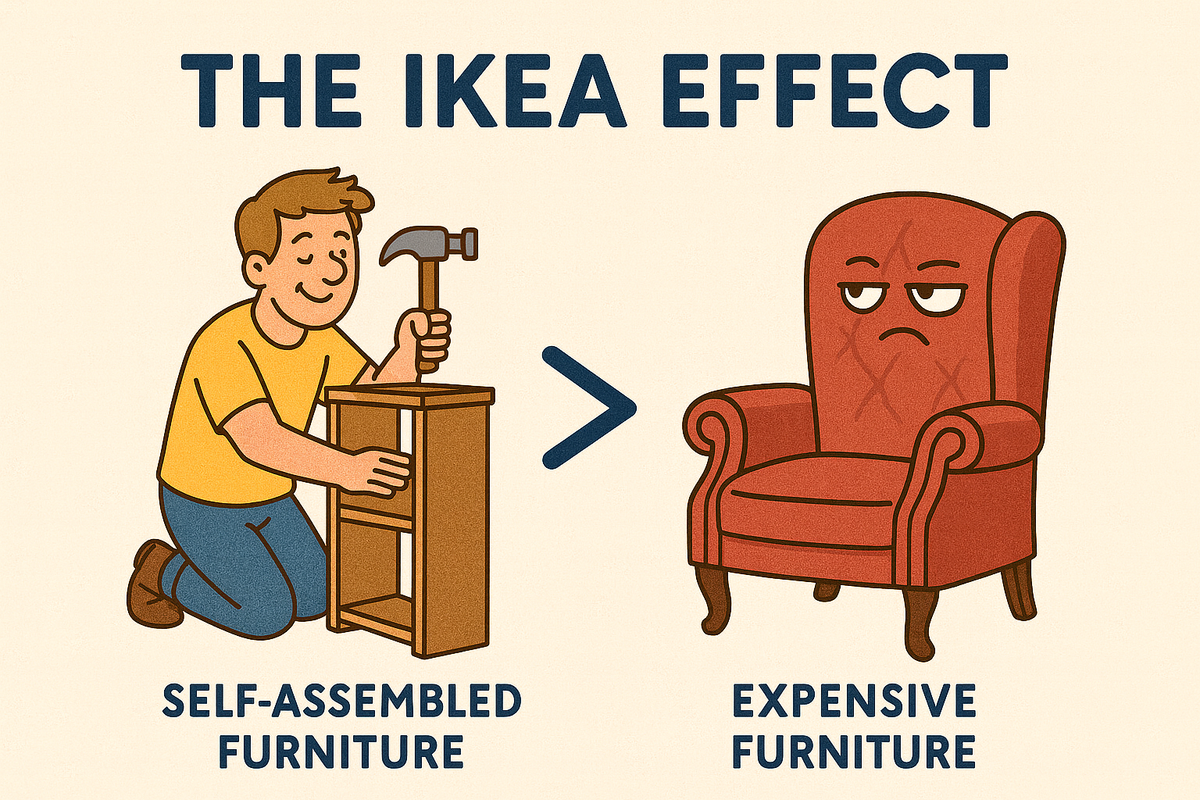
Ever notice how that wobbly shelf you assembled feels priceless? That’s the IKEA Effect, a cognitive bias where we value things more when we’ve put effort into creating them.
Stay Updated
Get actionable AI & tech insights delivered every Friday. No fluff, just value.
Subscribe to The Weekly Byte →- 🛠 Effort = Value – People place higher worth on items they’ve built themselves, even if the result is lower quality than store-bought.
- 🧠 Psychology at Work – Investing time and energy makes us more emotionally attached and more likely to overrate our creations.
- 💸 Business Goldmine – Companies like IKEA and Build-a-Bear thrive on this bias, turning effort into customer loyalty.
- 🎯 Beyond Furniture – The effect applies to work projects, hobbies, and even relationships—effort creates ownership.
The IKEA Effect reminds us that sometimes it’s not the product itself, but the sweat we pour into it, that makes it feel invaluable. The same goes for software projects or anything we help create. When we create something, we consider the product much more valuable.
Now get building!
💾 One File to Rule Them All: AGENTS.md Becomes the AI Agent Guidebook
AI-powered coding tools have long relied on a confusing tangle of config files one per agent. Now, the community is rallying behind AGENTS.md as the universal setup guide, simple, Markdown-based, and tool-neutral.
- 🧩 End to Agent-Specific Chaos – AI coding tools used formats like CLAUDE.md, .cursorrules, or even AGENT.md, forcing developers to maintain multiple config files. AGENTS.md brings clarity.
- 🌐 Built for All Agents – This document lives in your project root and outlines everything from project structure to build commands, coding style, testing protocols, and security practices.
- 🤝 Wide Industry Adoption – OpenAI, Amp, Gemini CLI, OpenCode, and more have added support for AGENTS.md, recognizing its neutral and practical value.
- 🔄 Legacy Support via Symlinks – Tools not yet onboard can still work seamlessly by linking their custom config files—like CLAUDE.md or GEMINI.md—to AGENTS.md.
AGENTS.md isn’t just a file; it’s the start of order in a messy landscape. It ensures AI agents understand your projects consistently and efficiently, making teamwork with bots smoother and scalable.
📦 Shrinking the Cloud: How Mini PCs Are Winning on Cost and Control
I have a lot of respect for Alex Ellis and was fortunate to be part of the Docker Captains program with Alex. Alex is a master tinkerer. He is my go-to resource for anything Raspberry PI or building local Serverless solutions.
Alex is spearheading a movement to move back on-prem (or in-home with development). With rising cloud costs and limited flexibility, Alex Ellis turned to Intel N100 Mini PCs as a lean, powerful alternative for R&D. The move gave him more control, better performance, and surprising savings—so much so that one quickly became two.
- ⚡ Tiny but Mighty – The Intel N100 packs a surprising punch with 4 cores, 4 threads, and up to 3.4 GHz turbo performance, all in a low-power fanless package capable of supporting up to 32 GB RAM and NVMe storage.
- 🧩 Perfect for Clusters – With virtualization built-in (KVM and Firecracker compatible), Ellis runs multiple micro-VMs and Kubernetes clusters—even testing OpenFaaS setups across both units.
- 🥧 Raspberry Pi Who? – Compared to the Pi 5, his N100 setup showed a 3× speed boost—especially noticeable when compiling kernels or running CI tasks.
- 📈 Scaled with Ease – The low price point made scaling simple. Why limit yourself to one when you can afford to add more and expand your R&D playground?
Alex’s experiment shows that stepping away from the cloud can give developers more flexibility, better control, and serious bang for the buck.
🏗️ OneUptime Ditches AWS to Save a Cool $230K a Year
OneUptime traded cloud chaos for a bare-metal revival, and the payoff was massive. By reclaiming control of their hardware and tuning performance with open-source tools, they dramatically shrank their cloud tab.
- 💸 Big Savings, Big Impact – Moving away from AWS slashed their hosting costs by an eye-watering $230,000 annually.
- 🛠️ Smarter Stack – They leaned on tools like Docker, Helm, MicroK8s, Ceph, and Kubernetes to make the shift smoother and more reliable.
- 🔄 Hybrid Resilience – AWS isn’t gone yet; in fact, it's their backup plan during outages, helping ensure uptime even in their DIY setup.
- 👑 Control Is King – Beyond cost, the move gave them autonomy from hardware to network to optimize performance and eliminate cloud unpredictability.
OneUptime’s bare-metal pivot proves that cloud isn’t always king. Sometimes, rolling up your sleeves and owning the stack pays off—in dollars and control.
🧱 Yes, Someone has built a Remote Control Lego Submarine
One Redditor is turning childhood imagination into deep-sea engineering by attempting to build a fully functional submarine powered by Lego parts. The project is part passion, part madness, and it’s capturing the internet’s attention.
- ⚙️ Brick by Brick – The sub’s propulsion system and body are made from Lego pieces, with creative hacks to handle underwater pressure.
- 🌊 Testing the Waters – Early trials show promise, though keeping the sub watertight is proving to be the biggest challenge.
- 🚤 More Than a Toy – The builder is mixing Lego with real engineering components to push the limits of what plastic bricks can actually do.
- 🎥 Internet Gold – Videos of the build have gone viral, sparking debates on engineering genius vs. playful insanity.
It’s the kind of project that makes you wonder: are we looking at the world’s most over-engineered toy… or the start of Lego’s next product line?